Your Next AI Strategy Should Start at the Dealer Counter
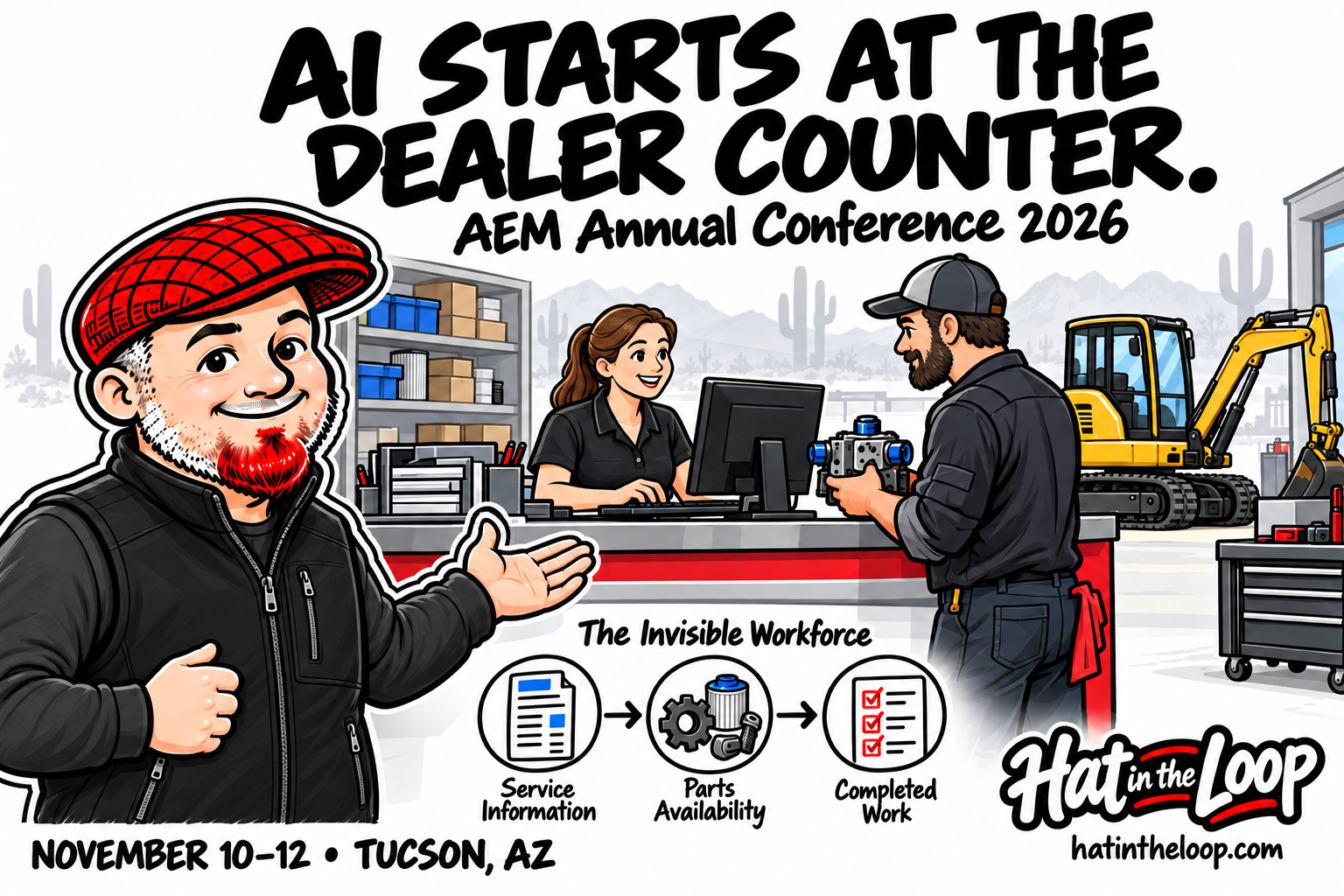
A technician needs an answer. A service manager is waiting on a warranty question. Someone at the parts counter is trying to confirm which component belongs on a particular machine.
The information might already exist. Finding it, checking it, and getting it to the right person can still take more work than it should.
That is where I want to start the AI conversation.
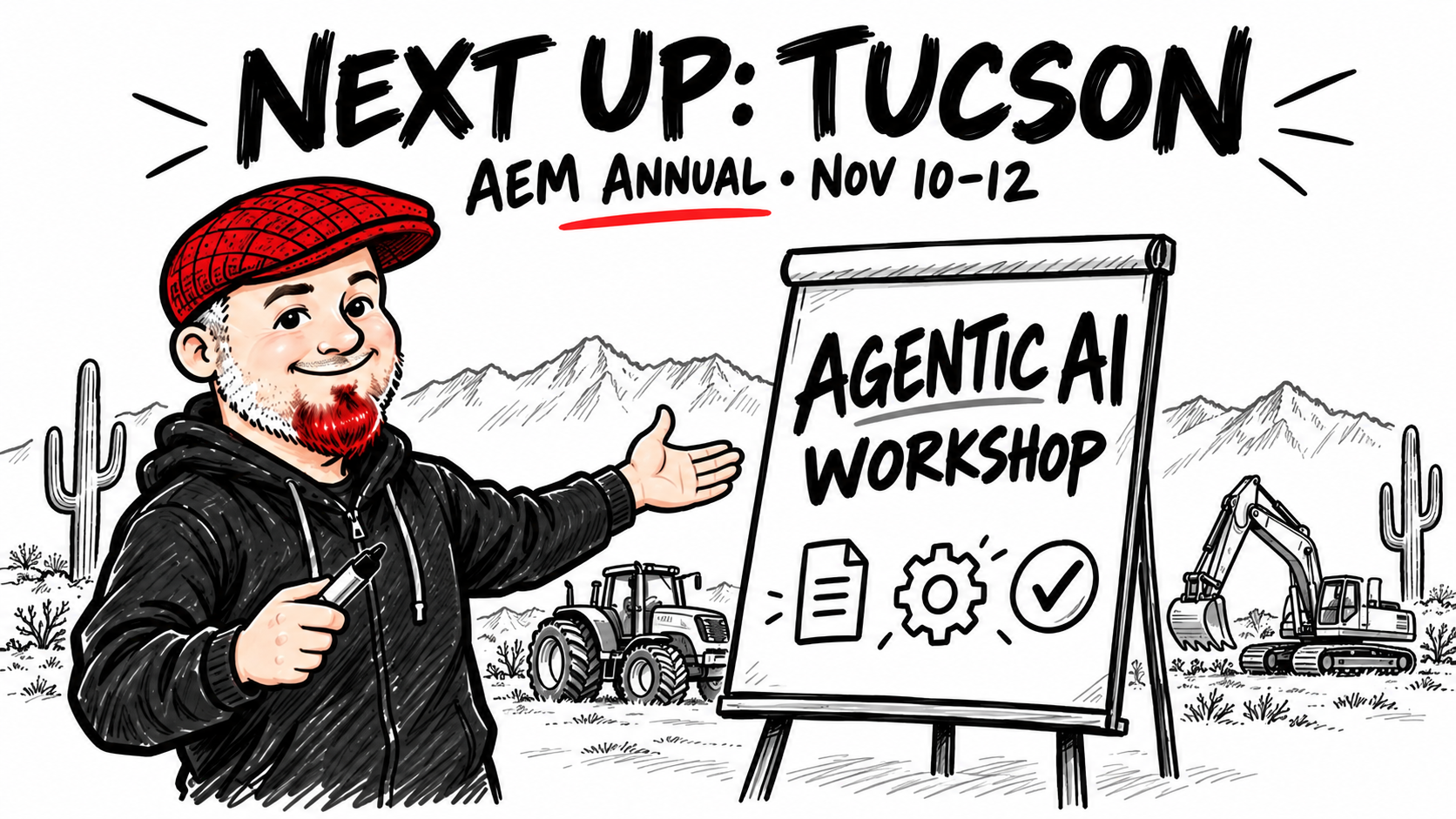
This November, I’ll be at the 2026 AEM Annual Conference in Tucson, Arizona, leading a 90-minute workshop on deploying AI beneath the workflows dealers and technicians already use. The conference takes place November 10–12 at the JW Marriott Tucson Starr Pass Resort & Spa, with the theme “Moment to Rise: Limitless Possibilities.”
For me, the practical question behind those possibilities is simple: what can we make easier for the people doing the work?
Start with the work already happening
Equipment manufacturers operate through relationships. The dealer knows the customer. The technician knows the machine. The service team knows which details are missing when a request comes in. Experienced people carry an enormous amount of context.
An AI strategy has to account for that environment.
A dealer network can include different systems, different levels of technical capacity, and different ways of getting through the day. An approach that seems straightforward at headquarters may create extra steps for someone handling a service backlog.
Before asking people to adopt something new, I want to understand what they are already doing. Where do they wait? What do they enter twice? What information do they repeatedly chase? Which questions always end up with the same experienced person?
Those details give us a useful starting point. They also help explain why adoption can stall even when the technology works as designed.
The invisible workforce
The idea behind my workshop, “The Invisible Workforce,” is to put AI agents to work underneath familiar processes. The goal is to improve the work without making a new app or a new frontline routine the price of admission.
Think about a service request arriving through an existing channel. Behind that request, an AI Co-Worker could gather the machine information, cross-reference approved service material, identify missing details, and prepare a response for the appropriate person to review.
The dealer receives a better-prepared answer through a process they recognize. The support team spends less effort assembling the background and more time resolving the issue.
That is a proposed workflow, not a promise that every request can be automated. Some cases require judgment, more information, or escalation. A useful system needs to recognize those boundaries.
“Invisible” describes the amount of extra effort we ask of the frontline user. The people responsible for the system still need visibility into its sources, actions, exceptions, and approvals.
Follow one problem through the business
Consider a hydraulic fault reported by a dealer. Before someone can respond effectively, they may need the machine’s configuration, service history, relevant bulletins, parts information, and the details of what the technician has already checked.
That single problem can create work across several teams.
An AI workflow could help assemble those records, flag conflicting information, and route unanswered questions to the right owner. It could prepare a warranty review package or track a follow-up that might otherwise remain buried in an email chain.
The technician would still perform the necessary diagnostic work. Authorized people would still make the decisions that require their expertise and approval. The opportunity is to reduce the searching, copying, and coordination around them.
This is how I want leaders to think about the possibilities: follow one real problem from the moment it appears to the moment it is resolved. Then ask where assistance could remove a delay or improve the quality of a handoff.
A workshop built around the difficult questions
I want this to be an interactive session. Bring the situation that makes you say, “That’ll never work here.”
Maybe your dealers use different systems. Maybe a previous rollout struggled. Maybe the information is inconsistent, ownership is unclear, or the person who knows the answer is already stretched thin.
Those details belong in the discussion. They are the conditions a useful implementation has to address.
We’ll work through what a focused 90-day pilot could look like and how it could inform a 12-month roadmap. I want participants to leave with a clearer way to choose a workflow, identify the information it depends on, define human review, and decide what evidence would justify expanding it.
A pilot should answer a business question. Can we shorten the time needed to prepare a service response? Can we reduce incomplete submissions? Can we help a team find relevant information with fewer handoffs?
The starting point needs to be narrow enough to measure and important enough that someone cares about the result.
Leadership has work to do, too
AEM’s announced conference topics include AI, economic and market signals, leadership, and the future workforce. [2] That combination is relevant because an AI project requires decisions that software cannot make for the organization.
Who owns the workflow? Which information can be trusted? Who can authorize an action? What happens when the system encounters something unexpected? Who is responsible for improving it after the pilot?
My perspective is that leaders need to establish those answers early. Otherwise, a promising demonstration can leave the organization with unresolved responsibilities.
The business case needs the same discipline. Faster access to information is useful, but we should examine what that changes: response time, rework, capacity, customer experience, or the burden on experienced staff. We also need to account for the cost of integration, maintenance, and review.
That gives a leadership team something concrete to evaluate.
I’m coming to learn as well
One of the reasons I value these events is the opportunity to hear how other leaders are approaching problems I recognize—and problems I have not considered yet.
AEM has announced keynote speakers Sam Jordan and Rich Hua. Jordan’s session will explore change at the intersection of AI, sensors, and biotech. Hua will focus on emotionally intelligent leadership during periods of change and complexity. [3]
I’m interested in both perspectives. We need to understand what technology makes possible and how to help people work through the changes that follow.
I’m also looking forward to the conversations between sessions. I want to hear what members have tried, what they have learned from their dealer networks, and which assumptions they have had to revisit.
My background in training and technical communications has taught me to pay attention to the distance between having information and being able to use it. I’m bringing that perspective to Tucson, and I expect to leave with new questions.
Bring the problem you keep working around
If you’re attending AEM Annual, come find me with the workflow that keeps getting stuck. The service question that bounces between teams. The information someone has to re-enter. The follow-up that depends on one person remembering to make a call.
Those are the stories I want in the room.
The opportunity for AI in this industry starts with understanding the work, respecting the people who know it, and making a useful improvement they can recognize.
I’ll see you in Tucson. Look for the guy in the hat.