The World Changes on Tuesday. I’m Speaking on Wednesday.
Why my presentation can change the morning I speak: the topics are planned, but the examples, demonstrations, and conversation need to stay relevant.
“Can you send us your presentation?”
I get asked that a lot. Sometimes the event is five, six, even seven months away. Sometimes the organizers need the deck 90 days in advance.
My answer is usually the same.
“Absolutely. You can have it anytime. Just understand that it might look completely different by the time I get there.”
“Why?”
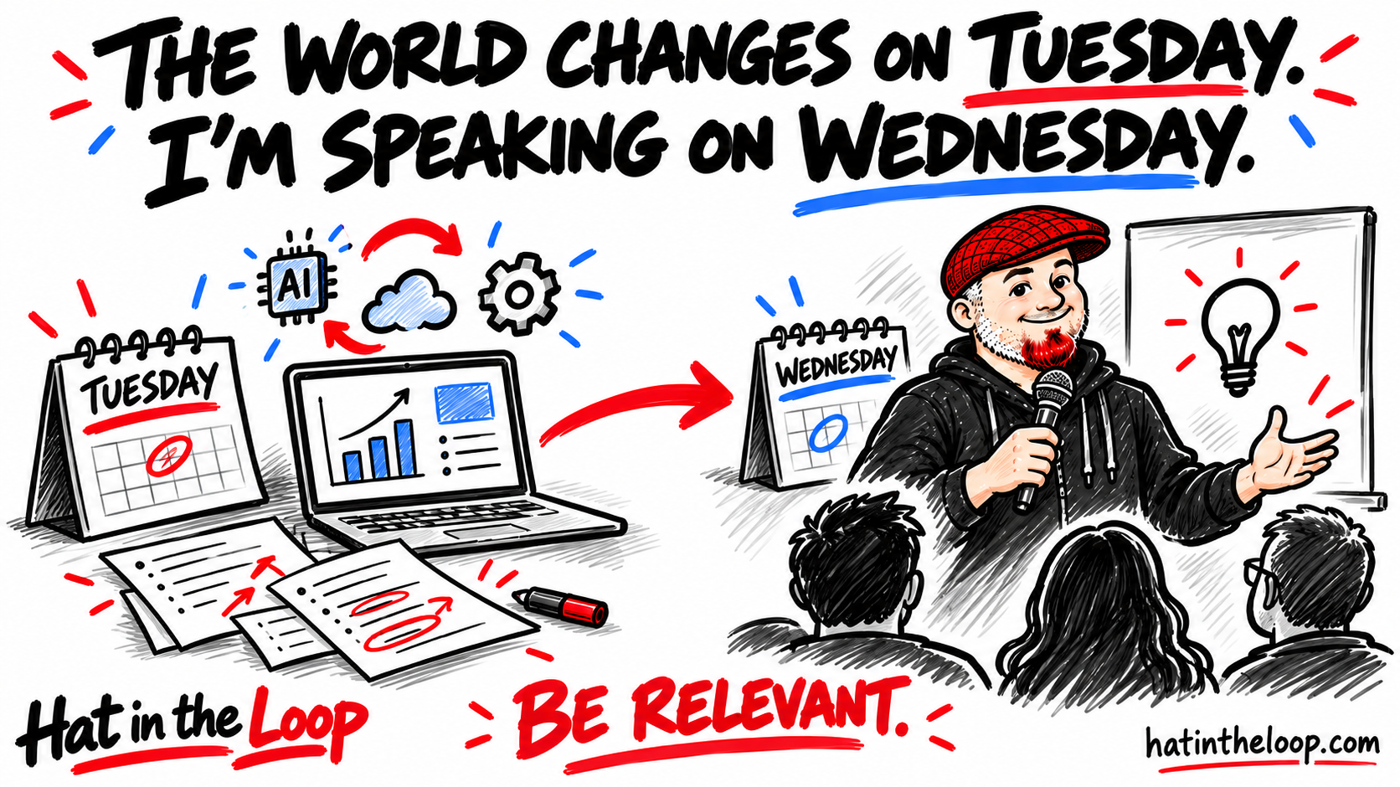
“Because the world is changing on Tuesday.”
“What happens on Tuesday?”
“I don’t know. But something will.”
That’s what it feels like to speak about technology right now.
An example that makes perfect sense today might need a completely different explanation two weeks from now. A workflow I planned to demonstrate might have changed. Something that was difficult when I agreed to speak might be much easier by the time I walk onstage.
And sometimes the news changes without changing what actually works. That’s part of the conversation, too.
So yes, I’m often rebuilding parts of a presentation the night before. Sometimes the morning of.
The topics are planned. I know why I’ve been invited, who I’m speaking to, and what I want people to leave understanding. That preparation happens well before I arrive.
But the examples, the order, the demonstration, and the conversation? Those need room to move.
I understand why event organizers want the deck early. They have an event to run. They need to know that the session fits, that the speaker is prepared, and that the technology will work. That’s fair.
I can give you the direction early. I just can’t promise that a screenshot from three months ago will still deserve a place on the screen.
I have a line I use that gets a few looks:
“Slides are for children.”
Preferably at a playground.
Yes, I use PowerPoint. I use graphics. I use video. A good visual can explain something faster than I can, and sometimes it gives everyone in the room a useful place to focus.
But if all I’m doing is reading the screen, I could have emailed you the file.
You invited me to speak because of the experience, perspective, and conversation I can bring. I should know the subject well enough to explain it, answer questions, and follow a useful discussion when it goes somewhere I didn’t anticipate.
The audience deserves more than a rehearsed tour of a deck I’ve delivered a hundred times without reconsidering it.
That doesn’t mean every talk needs to chase the latest announcement. A new tool isn’t automatically a better tool. Some lessons hold up for years. Keep those.
But check the examples. Try the workflow again. Ask whether the advice still makes sense for the people who will actually be in the room.
The point is to help them understand what matters now and what they can do with it.
So if you’re wondering why I’m changing my presentation the night before, that’s the answer.
The world changes on Tuesday. I’m speaking on Wednesday.
Be relevant.