The Next CEO Might Come from Customer Success
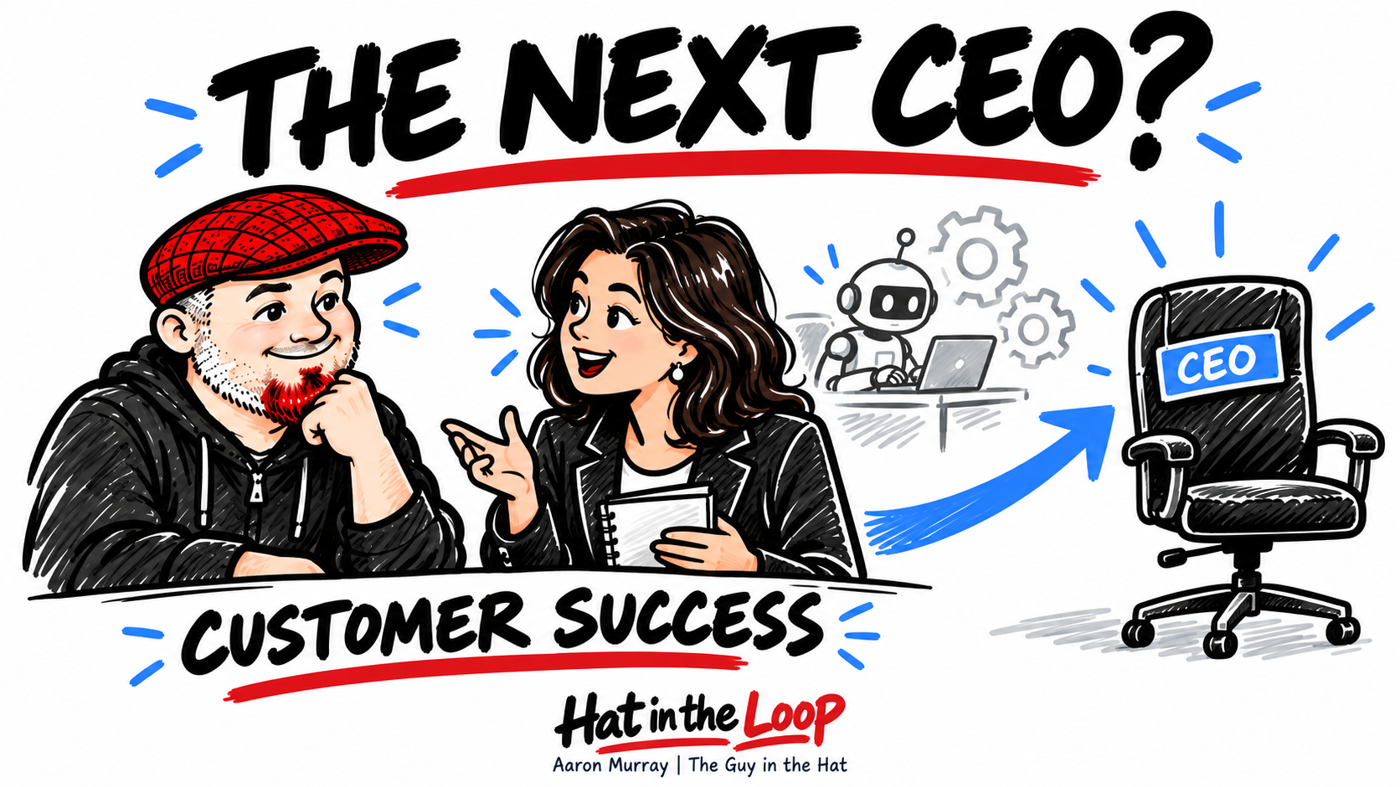
As robotics, AI, and automation take on more work, I believe customer success will become a major path into executive leadership. Someone still has to understand why the customer buys, stays, and leaves.
My thinking about executive leadership is starting to change.
Engineering has a familiar path into leadership in technology. Apple is a recent example. John Ternus moved from leading hardware engineering to becoming CEO on September 1, 2026, as outlined in Apple’s leadership announcement.
That makes sense to me. If you build complicated products, having someone at the top who understands how those products work is valuable.
But I think another path is going to become much more important.
Customer success.
My bet is that customer success will become a major pipeline into the C-suite, including the CEO’s office. And a big reason is the very thing we spend so much time talking about: automation.
We’re moving toward more robotics, more autonomous systems, and more AI doing work that used to require someone sitting in front of a screen. I spend a lot of my time thinking about what that makes possible.
I also keep coming back to the person on the other end of it.
Someone has a problem they need solved. Someone is responsible for the budget. Someone has to decide whether the thing they bought actually made their day better.
Even when an agent handles part of the buying process, there are people living with the result.
The more work we automate, the more valuable I think it becomes to understand those people.
Imagine a manufacturer buys an automated system to reduce delays. The demo looks great. The technology works. Six months later, employees are still keeping a separate spreadsheet because the system doesn’t fit one important part of their day.
Who notices that? Who understands why it’s happening? Who gets the right people together to fix it?
That’s the kind of work I mean when I talk about customer success: helping the customer achieve the outcome they bought the product for, and staying accountable after the sale.
The people doing that well have a valuable view of the business. They hear what sales promised, see what implementation delivered, learn where the product creates friction, and find out whether the customer has a reason to stay.
I think that perspective deserves more influence over where the company goes next.
I’ll acknowledge my own bias here. A lot of my career has involved customer engagement, training, and helping people put technology to work. I care about what happens after the presentation ends and somebody has to use the thing.
A great demo is fun. Getting a customer through an ordinary Tuesday matters a lot to me.
So if someone asked me where to spend their time developing as a leader, I’d tell them to build three obsessions.
Obsess over what your customer wants to accomplish. Spend time in their actual workflow. Learn what slows them down, what they’re responsible for, and what a good day looks like. A feature request is a starting point for that conversation.
Obsess over the problems they haven’t identified yet. Pay attention to repeated workarounds, confusing handoffs, and tasks they’ve accepted as “just how we do it.” Bring them an idea, then test it with them. Discovering an unmet need takes curiosity and listening.
Obsess over how well you serve them. Make onboarding useful. Make help easy to get. Follow through when something breaks. Check whether they’re getting the value they expected, long before a renewal conversation forces the question.
The strongest executive candidates will pair that customer understanding with financial judgment, operational discipline, and real product knowledge. Engineers can bring that combination too. I expect more leaders who developed it in customer success to get their opportunity.
That’s the shift I’m watching for.
As more of the work becomes automated, I believe the people who understand the customer best will have a much stronger claim to lead the business.
Who in your company understands why customers stay, and how much say do they have in what happens next?