
Oculus for Training
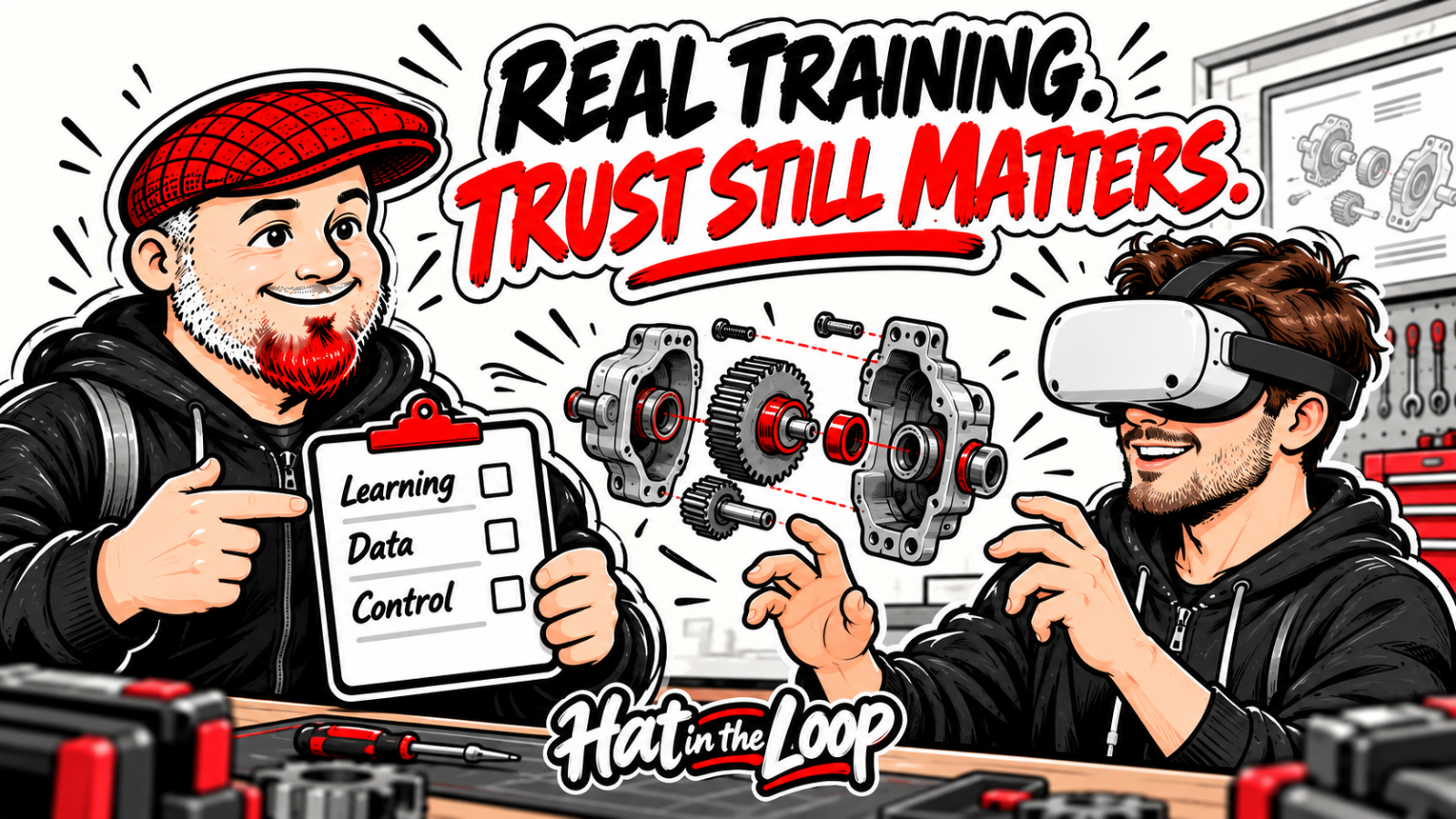
I have been a big user of Oculus headsets and Meta glasses for training. My interest in immersive learning comes from using the technology, not just watching product announcements.
Meta has also lost my trust. Both things are true, and that is the perspective I bring to its new VR Glasses. I want to understand what the hardware could do for learning without treating a new device as a fresh start for the company behind it.
Comfort is one part of that evaluation. You can build an incredible immersive experience and still lose someone the moment they decide they have had enough of wearing the headset.
That is why Meta’s new VR Glasses announcement deserves attention from people who care about training, product demonstrations, and getting useful work done. Comfort affects whether an experience gets a fair chance.
At Connect 2026, Meta announced VR Glasses weighing about 100 grams, with a planned spring 2027 release at $1,299.99 in the US. The system moves computing, storage, and the battery into a separate puck connected by an optical tether. The 100-gram figure describes the glasses, rather than everything you carry. Meta claims up to three hours of continuous high-resolution media playback from the puck’s battery.
That is an interesting tradeoff. Less weight on your face could make longer sessions more appealing. A tether and a separate device introduce their own practical questions. I want to see how the whole system works when someone is moving, adjusting their position, or sharing equipment with the next learner. Meta is pitching entertainment and productivity, including virtual screens, passthrough, and a keyboard and touchpad represented on a flat surface. These are announced features; I have not tested their comfort or usability.
My mind goes to learning experiences. Consider a new employee trying to understand how a machine’s components relate to each other. A diagram may explain the parts. A well-designed immersive model could let that person inspect the assembly, isolate a component, and see how a change affects the surrounding system. Or consider a sales engineer explaining service access before a customer buys equipment. A virtual walkthrough could expose awkward clearances or help the customer ask better questions while changes are still easier to discuss.
Those are potential applications, not Meta-announced training products. Their usefulness would depend on accurate content, appropriate interaction design, and a clear purpose for using immersion.
There is also a design tradeoff developers should pay attention to. Meta says VR Glasses use the same operating system, Store, and SDKs as Quest, with eyes and hands as the primary inputs. Its developer guidance lists a narrower field of view than Quest 3 and advises bringing important interface elements toward the center. Touch Plus controllers are supported but sold separately.
A training designer cannot assume an existing experience will feel right just because it runs. Can learners find the controls? Can they repeat a precise action? Does the interaction teach the task, or teach them how to operate the interface?
I would start with one learning objective. Perhaps identifying an incorrect assembly, understanding a sequence, or preparing for a customer demonstration. Then compare the immersive experience with the existing approach. Look at mistakes, time to competence, and whether someone can apply what they learned afterward.
Completing a virtual exercise should not automatically count as demonstrating competence on real equipment. The assessment has to match the job. That is a training-design responsibility no headset specification can handle for us.
I would also evaluate the account requirements, data flows, deployment controls, and dependence on external services. Those questions belong alongside comfort and learning outcomes when deciding whether a device fits a training program. My past use of Oculus does not answer them for this new hardware.
On the AI side, I am undecided about Muse. For now, I am keeping open-weight models running locally in my home ecosystem. That does not mean these new VR Glasses support my local setup; I would need to verify any integration separately. Local AI is my current direction, not a feature I am attributing to Meta’s hardware.
Lighter hardware could make it easier to put an experience in front of someone. Clearer text and easier controls could help them stay with it. But the content still has to justify their time.
I will keep following the form factor because I care about better training. But my next decision will require more than a compelling demonstration. The experience has to help someone learn, the deployment has to fit the environment, and I have to be comfortable with the access I am granting. A lighter device can improve comfort. Rebuilding my trust will take something else.