Keep Using ChatGPT. Let's Talk About the Rest of the Business.
A great AI tool can make someone's work easier. The next conversation is about connecting the systems, information, and handoffs across the business, with AI Co-Workers built around how that business actually operates.
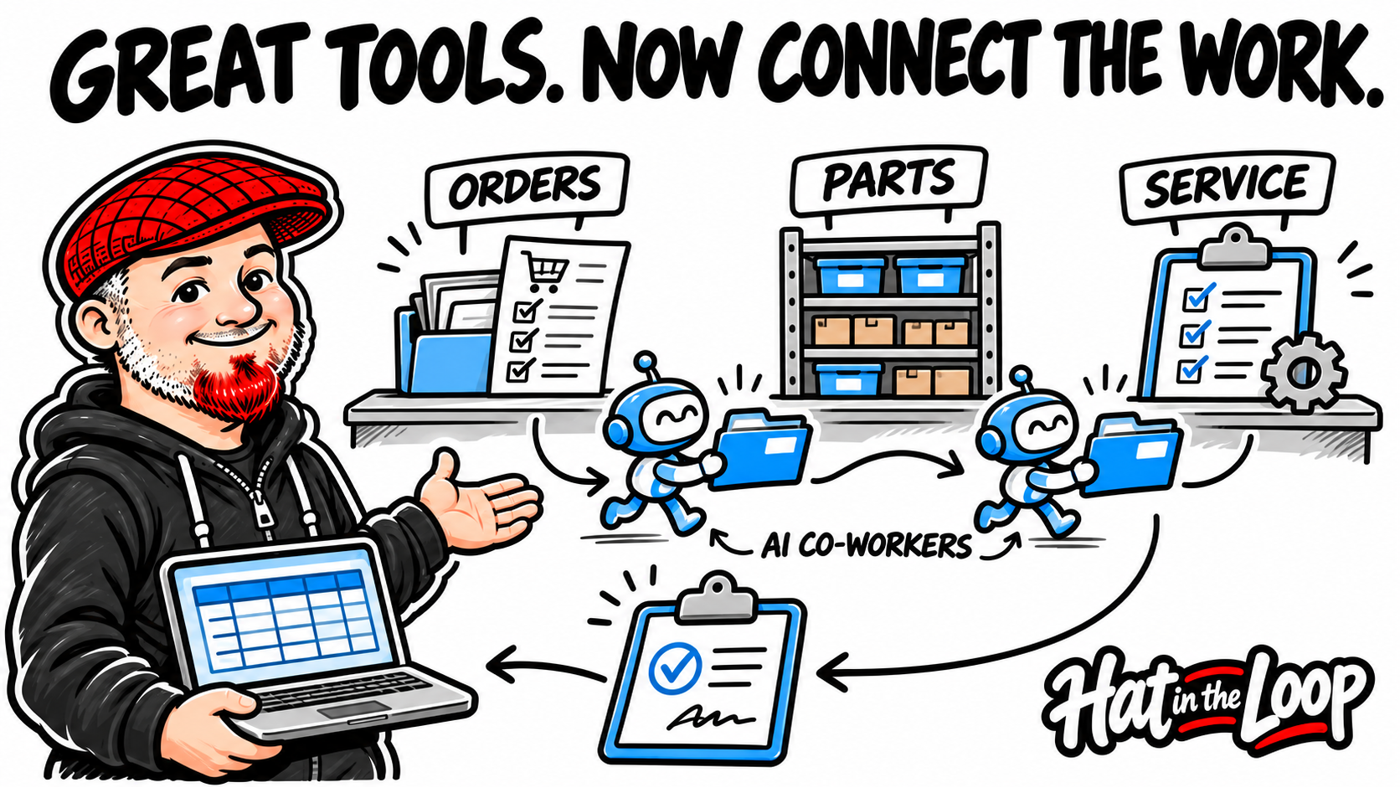
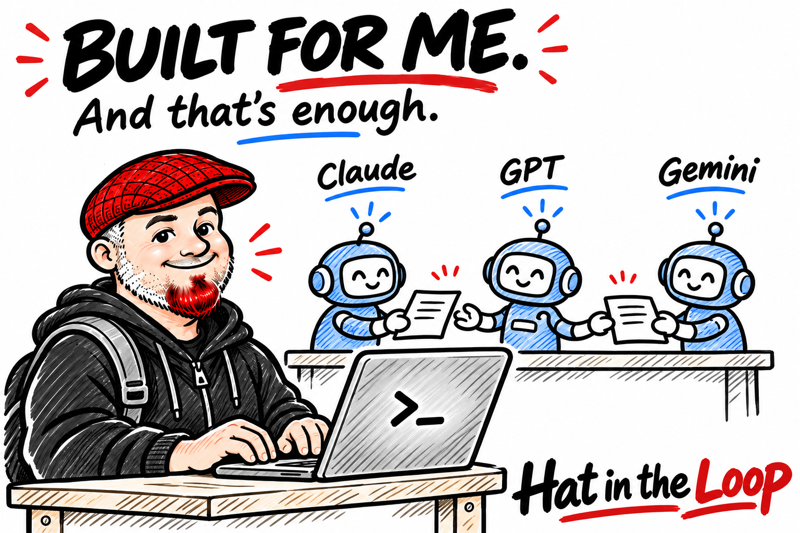
When someone tells me they're using ChatGPT, Claude, or Gemini, my response is pretty simple.
Good. Keep going.
If you're finding better ways to write, research, analyze information, or get through the work that used to eat your afternoon, that's wonderful. I use these tools myself. I'm certainly not going to tell you to stop.
But when that conversation turns to what we're doing at Subatomic, I want to talk about how the rest of the business works around those individual improvements.
The easiest way I can explain it starts with a spreadsheet.
Steve built a great spreadsheet
Picture Steve building an Excel spreadsheet. Formulas. Macros. A few buttons that save him from doing the same thing twenty times. He's figured out a better way to do his work.
That's useful software. He built it around a problem he understands, and it helps.
Then someone in operations builds their version. Service has another one. Finance has a process that works really well for finance.
Everybody has improved their little corner of the business.
Now follow a piece of work from one corner to the next.
Does somebody still have to export a report? Copy information into another system? Check which version is current? Email someone to ask whether the thing happened?
Steve's spreadsheet might be fantastic. Steve might also deserve a vacation.
The question is whether the process can keep moving while he's on it.
The handoffs are where it gets interesting
I see a similar pattern in how businesses can adopt AI.
One person builds a useful assistant. Another creates a repeatable prompt. A team develops a workflow around its documents. Those are worthwhile improvements.
But put enough separate improvements together without connecting them, and you can end up with people spending their day carrying information between very capable tools.
Someone still has to know where the information lives, whether it's current, who can use it, and what happens next.
That is a lot of work hiding between the work.
And to be clear, the spreadsheet comparison is about how work gets organized. It isn't a claim that these AI products only chat or run locally on somebody's computer. ChatGPT, Claude, and Gemini already offer capabilities for connecting business information and taking work beyond a conversation.
The question is what your company has actually connected, implemented, and made dependable.
Give the AI a job in your business
At Subatomic, we start with the customer's workflow. What needs to happen? What information does it require? Which systems are involved? Who makes the decisions? Where does the work get stuck?
Then we build around that.
We connect the relevant information and systems through Subatomic IQ and configure AI Co-Workers for defined roles in that customer's operation. Their work is shaped by the company's procedures, knowledge, permissions, and approval requirements. That's the approach behind our AI Co-Workers.
When I talk about bringing information together, I mean giving people and AI Co-Workers a consistent way to find and use the information needed for the job. Your existing business systems still have their roles. We have to establish which records to trust and what to do when they disagree.
You can ask questions of that connected information. You can also build a workflow that uses it to move work forward.
Those are two useful capabilities. The second requires us to define what the AI is allowed to do, what it must check, and when a person takes over.
What does that look like?
Imagine a manufacturer whose dealers aren't getting parts when expected.
The order is in one system. Inventory is in another. A supplier update is sitting in an email. The dealer's latest request is somewhere else.
A useful AI conversation could help someone make sense of those inputs. A workflow built for that manufacturer could go further.
With the necessary connections and permissions in place, AI Co-Workers could bring together the affected orders, check the latest supply information, identify the dealers at risk, and prepare options for the responsible team. Conflicting dates or missing records would become questions to resolve.
A person would approve the response and any consequential changes. The workflow could then update the approved records and track the follow-up.
That's an illustrative workflow, not a claim about a particular customer deployment. The point is the connection between the steps. The work has a path from the first signal through a decision to follow-through.
Keep the tools. Connect the work.
For Subatomic, that approach also includes running inside the customer's environment, preserving permissions, and keeping an audit trail through DeepLens. Our architecture allows us to choose models for the job instead of tying the whole implementation to a single model. Environment and oversight. Model flexibility.
Those choices matter when AI becomes part of an operating process. So does the less glamorous work of mapping the process, connecting the systems, testing exceptions, and deciding who owns the result.
You don't have to connect the entire company on day one. Start with one workflow that matters. Understand it. Build it. Test it. Then expand what works.
So yes, keep using ChatGPT. Keep using Claude. Keep using Gemini. Keep building things that help.
And when we talk about Subatomic, let's follow the work across your business and figure out what it would take for AI Co-Workers to carry more of it.
Steve can keep his spreadsheet.
I'd just like him to be able to take that vacation.