I Paid for Convenience. And Privacy.
A simple request for directions to my son turned into a bigger question about AI assistants: can they finish the job, explain their limits, and earn the access they want?
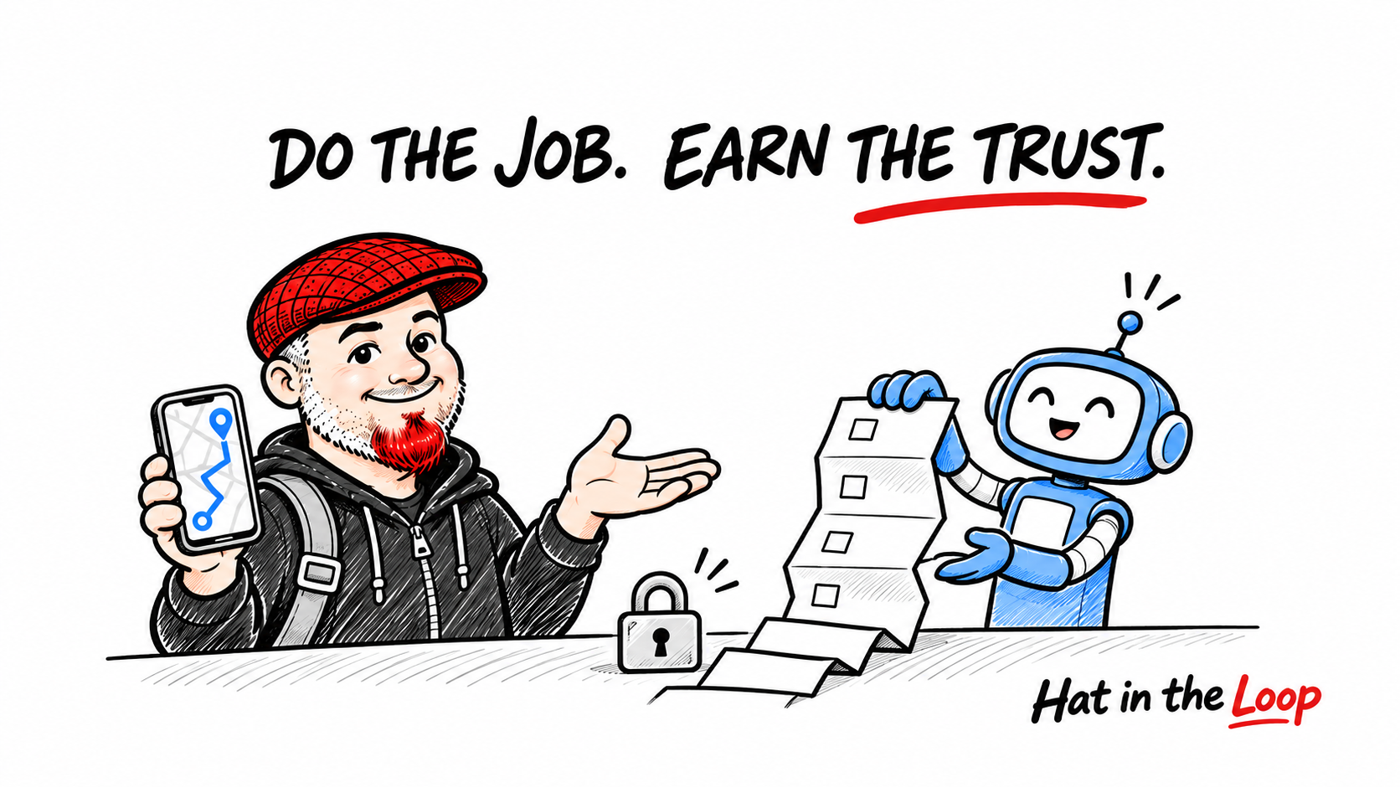
I asked Siri for directions to my son.
We already share our locations. I wanted help using information our family had already chosen to share.
It didn't finish the job. I ended up having to go into Maps, get the address, and work through the steps myself.
I bought an assistant. Somehow, I am still the assistant.
That sounds like a small complaint. It is. But enough small complaints start changing what I am willing to buy.
Apple actually documents a direct path: open Find My, select the person, and tap Directions to open Maps. The capability exists. My frustration is that Siri didn't get me through that handoff when I asked. Apple's Find My instructions.
And let me be precise about something. Siri does use AI. Apple was documenting its use of deep learning years ago. Calling it “not AI” would be inaccurate. What I mean is that using it can still feel like navigating a rigid command menu, with me responsible for connecting the pieces. Apple's Siri research.
Apple now promotes its newer Siri around personal context and actions across apps. That is exactly the kind of experience I want. My expectations are being set by the promise, then tested by what happens on my phone. Apple's Siri announcement.
Using Claude, ChatGPT, and connected tools has changed those expectations. When the right integrations and permissions are in place, I want to ask for an outcome and have the tool carry the work through. That doesn't mean those tools automatically have access to my family's location. The connections still matter.
A capable model is one part of a useful assistant. The product has to finish the job.
I have the same frustration with Google Home.
I spent real money putting that system into my house. It used to feel useful and dependable. Lately, my experience with “Hey Google” has felt slower, less reliable, and more frustrating.
I think Gemini itself is excellent. That makes the gap between the AI and the experience in my home harder to accept.
Google still describes Gemini for Home as an early-access rollout. Its documentation also says that once a home switches, it cannot switch back to Google Assistant. That is a meaningful commitment for something my family is supposed to depend on. Google's Gemini for Home documentation.
At some point, I stop thinking about the next device and start wondering why I would buy another one.
Apple's HomeView caught my attention. But before I spend more money moving my house into another ecosystem, I want the everyday experience to earn it.
Then there is privacy.
Part of the premium I have been willing to pay Apple was for that promise. I want useful tools, and I want to understand what access I am giving them.
The conversation features announced for Apple Watch make me stop and think. The details matter here.
Apple describes Live Rewind as an opt-in feature that displays the previous 15 seconds of speech after a double press of the Digital Crown, with audible and visible signals. Siri Recap is a separate, opt-in feature that summarizes conversations and can run on a schedule the wearer chooses. Apple's support page lists both for a later-2026 beta on supported watches. Apple's Audio Intelligence documentation.
Apple says these features do not retain audio recordings. Live Rewind processes speech on-device; Siri Recap sends condensed text to Private Cloud Compute to produce its summary. Those are meaningful protections, and the distinction between processing audio and keeping a recording matters. Apple's privacy explanation.
I can see why someone would find these features useful.
My concern is about the other people in the conversation. The person who enabled a feature is not necessarily the only person whose words it processes. I want people to understand when a conversation is being turned into something someone else can keep.
Keeping information secure and making everyone comfortable with its capture are separate responsibilities.
That is where my trust starts getting shaky. I don't want to need a technical explanation every time I have a conversation near somebody's device. I want the boundaries to be understandable.
With John Ternus now leading Apple, I want privacy to remain a reason to pay that premium. A leadership change alone doesn't prove the promise has changed. What the company ships, and how clearly it explains it, will determine that for me. Apple's leadership page.
This applies to anybody building an AI tool or an AI co-worker.
Tell me what it does today. Tell me where it stops. Ask for the access the task actually needs. Make it clear what happened and what still needs a person.
I can work with an honest limitation. I lose confidence when I have to discover the limitation halfway through the job.
And I can appreciate an impressive feature without wanting it involved in every part of my life. Being impressed is not the same as giving permission.
I want fewer steps, dependable results, and control I can understand. That is what earns the next purchase.
Which everyday assistant still earns your trust... and which one have you quietly stopped asking?