ALF, Open Models, and the Intelligence Moving Into Our House
My lifelong obsession with ALF turns out to be a useful way to think about open AI models: unfamiliar intelligence arriving in our environment, where context, control, and house rules matter.
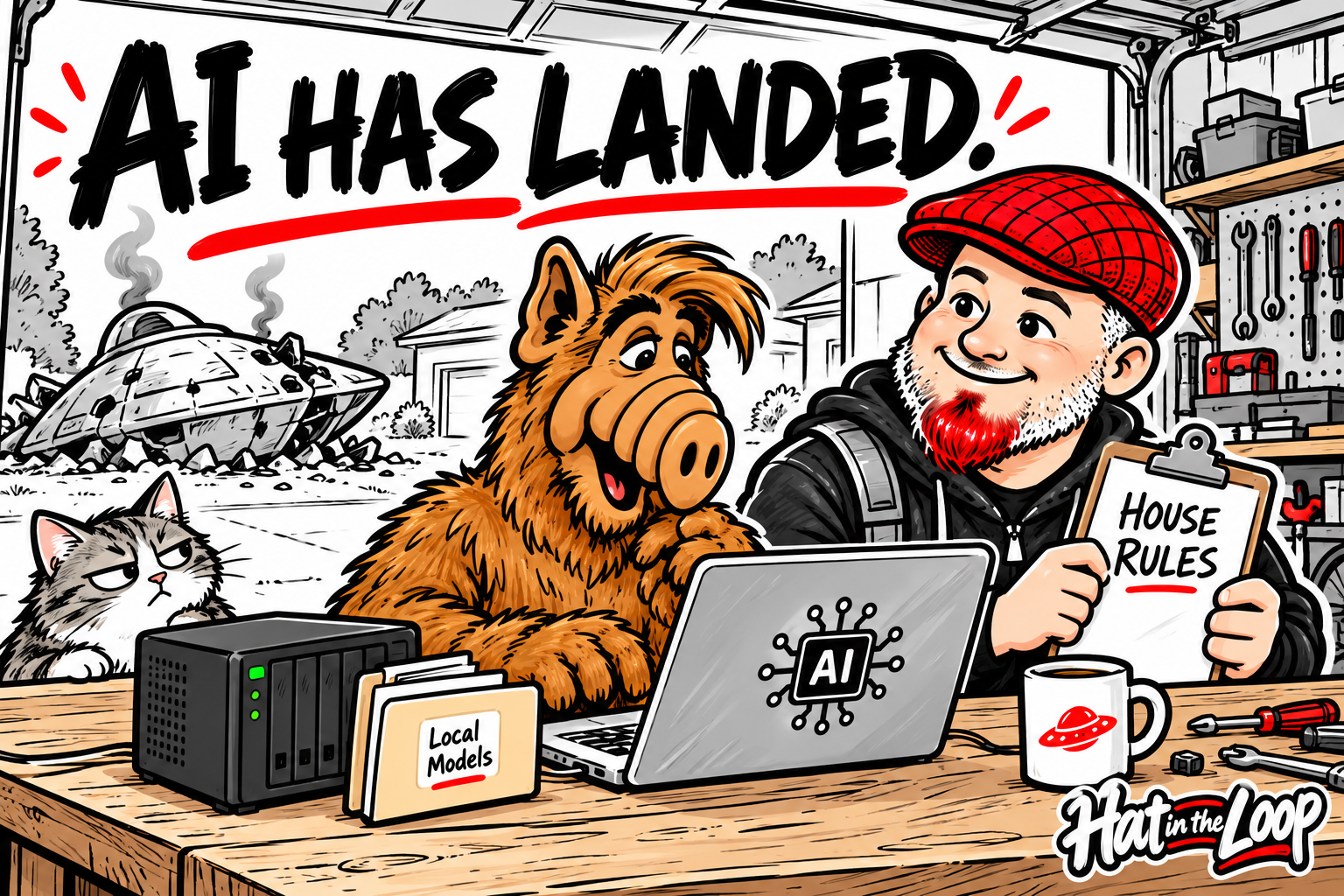
One of my favorite shows growing up was ALF.
Actually, “growing up” makes it sound like I moved on. I still have ALF dolls. I’ve listened to the ALF album. The obsession is alive and well.
And lately, I keep thinking about that furry alien from Melmac when I look at what’s happening with open AI models.
Stay with me.
ALF crash-lands in the Tanner family’s garage. Suddenly, there’s an unfamiliar intelligence living in their house. He has knowledge, opinions, and his own ideas about how things should work.
He also has absolutely no business being left alone with the cat.
That feels like a pretty good starting point for a conversation about AI.
A model arrives with capabilities built somewhere else. Then we drop it into a business and expect it to understand our customers, our terminology, our messy processes, and the spreadsheet somebody named “FINAL_final_v7.”
It has landed in a stranger’s house.
Being capable doesn’t mean it understands the household.
That connection is part of why I’m so interested in open models. With a suitable model and the right hardware, we can bring the intelligence into an environment we control. Local tools already let us run downloaded models and work with documents offline.
Our computers. Our infrastructure. Our context.
A quick distinction matters here: open weights and open source aren’t interchangeable. Access to a model’s weights can let us run it ourselves and, depending on the license, adapt it. Full open source AI goes further, including code, information about the training data, and freedoms to use, study, modify, and share it. The label deserves a closer look.
But the practical opportunity is big.
Imagine a manufacturer running a model alongside its own service manuals. A technician asks a question, and the system retrieves the relevant instructions for that machine. The people who know the equipment can check the answer and improve the setup.
Or a small team builds an assistant around its own documents and workflows, with control over where the information is processed and which tools the assistant can access.
That context has to be supplied deliberately. A model doesn’t absorb your business just because you installed it.
ALF needed house rules. So does the system around the model.
Which information can it access? What is it allowed to do? When does a person need to check its work?
Running locally gives us more control over the setup. We still have to secure it, maintain it, test it, and pay for the hardware. The humans remain responsible.
What excites me is how many people can participate. When the releases and licenses allow it, developers can adapt models, share improvements, and build for needs the original creators never considered.
More people get to help shape how this technology works.
I think that could fundamentally change who gets to build with AI, and who gets to decide how it fits into everyday work.
The crash landing gets everyone’s attention. The interesting part is what happens after it arrives.
Can we give it useful context? Can we make it a dependable part of the household? Can we keep the humans in charge?
That’s the future I want to help build.
We should probably still keep an eye on the cat.